A school adventure trip can be organised as a same-day excursion or as a residential end-of-year experience.
Both options can combine learning, group bonding and physical activity, but they differ greatly in duration, budget and organisation. This guide helps schools choose the most suitable format.
The right choice depends on the school’s objective
There is no single option that is always best. A one-day trip works well when the school wants a focused activity, a controlled budget and simple logistics. A residential trip offers more time for bonding, allows several activities and creates a fuller end-of-year experience.
Before requesting a quote, define the main aim: group bonding, physical education, contact with nature, an end-of-stage celebration or greater independence.
One-day school trip: advantages and limits
A day trip keeps costs lower and organisation simpler. Pupils can travel in the morning, complete an adventure programme and return to school in the afternoon. It suits groups within a reasonable travelling distance and schools that prefer not to organise an overnight stay.
Its main limitation is time. Transport, arrival, changing and safety briefings take up part of the day, so one or two well-planned activities usually work better than an overloaded programme.
Residential end-of-year adventure trip
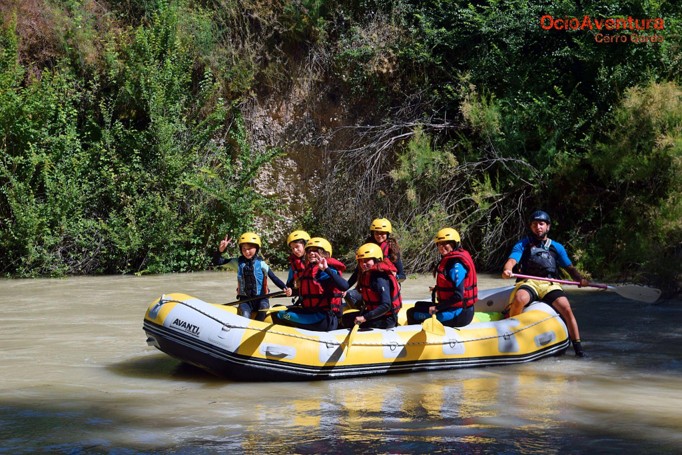
A stay of one or more nights makes it possible to combine rafting, orienteering, archery, cooperative challenges and nature activities. It also provides proper time for meals, rest and social interaction.
This option requires more coordination: accommodation, room allocation, meals, overnight supervision, luggage, medication, permissions and behaviour rules. The budget is higher, but the experience can be more memorable and educational.
Quick comparison: day trip or residential stay
| Feature | One-day trip | Residential trip |
| Duration | One day | Two or more days |
| Budget | Lower | Higher, including accommodation and meals |
| Activities | One or two main activities | A broader programme |
| Logistics | Simpler | Rooms, meals and overnight supervision required |
| Group bonding | Limited time | More time together |
| Best for | Nearby groups and first trips | End-of-year trips, distant groups and older pupils |
Which option suits each group?
Primary school groups
For primary pupils, a one-day trip or short stay often works best, particularly when it is their first experience away from home. Activities should be accessible, with simple instructions, breaks and alternatives for different confidence levels.
Secondary and sixth-form groups
Older pupils can usually make better use of multi-activity programmes and residential stays. These trips can develop independence, cooperation and responsibility, provided that supervision and expectations are clear.
Groups travelling from farther away
When the journey takes several hours, staying locally can prevent an excessively long day. It also allows activities to be divided across two days and makes better use of the hired coach.
How to calculate the real budget
Do not compare only the activity price. The total may include coach transport, accommodation, meals, instructors, equipment, insurance and alternative activities. A clear per-person package makes the cost easier to explain to families.
Provide an estimated number of pupils and teachers from the start, as transport and group organisation can significantly affect the final price.
Safety, information and supervision
The school should understand participation requirements, included equipment, insurance, emergency procedures and group organisation. Allergies, medication, injuries, support needs and other relevant circumstances must be communicated.
For a residential trip, agree responsibility, schedules, room rules, emergency contacts and procedures for overnight incidents.
Planning the trip step by step
1. Define the aims, ages and estimated group size.
2. Choose between an intensive day programme and a stay with several activities.
3. Request two or three possible dates and an itemised quote.
4. Confirm transport, accommodation, meals, permissions and specific needs.
5. Send families a clear clothing, footwear, luggage and timing list.
Frequently asked questions
How early should we book?
For large groups, spring dates and residential trips, earlier is better. Booking several months ahead makes it easier to secure transport, rooms and activity availability.
Can every pupil take part?
This depends on age, height, swimming ability and the requirements of each activity. The provider should suggest alternatives or adapted organisation when someone cannot complete a specific activity.
Is it better to include many activities?
Not necessarily. A realistic programme with time to change, eat and rest generally works better than an overcrowded timetable.
Can the programme be tailored?
Yes. Group size, ages, available time, budget and school objectives can all be used to create a suitable proposal.
Request a proposal for your school group
OcioAventura Cerro Gordo organises outdoor activities for groups and can help compare a one-day trip with a residential end-of-year experience. Include the year group, ages, estimated number of participants, possible dates and whether accommodation or meals are required.
Contact
Tel. +34 951 700 231 · WhatsApp +34 655 614 837 · info@ocioaventuracerrogordo.com